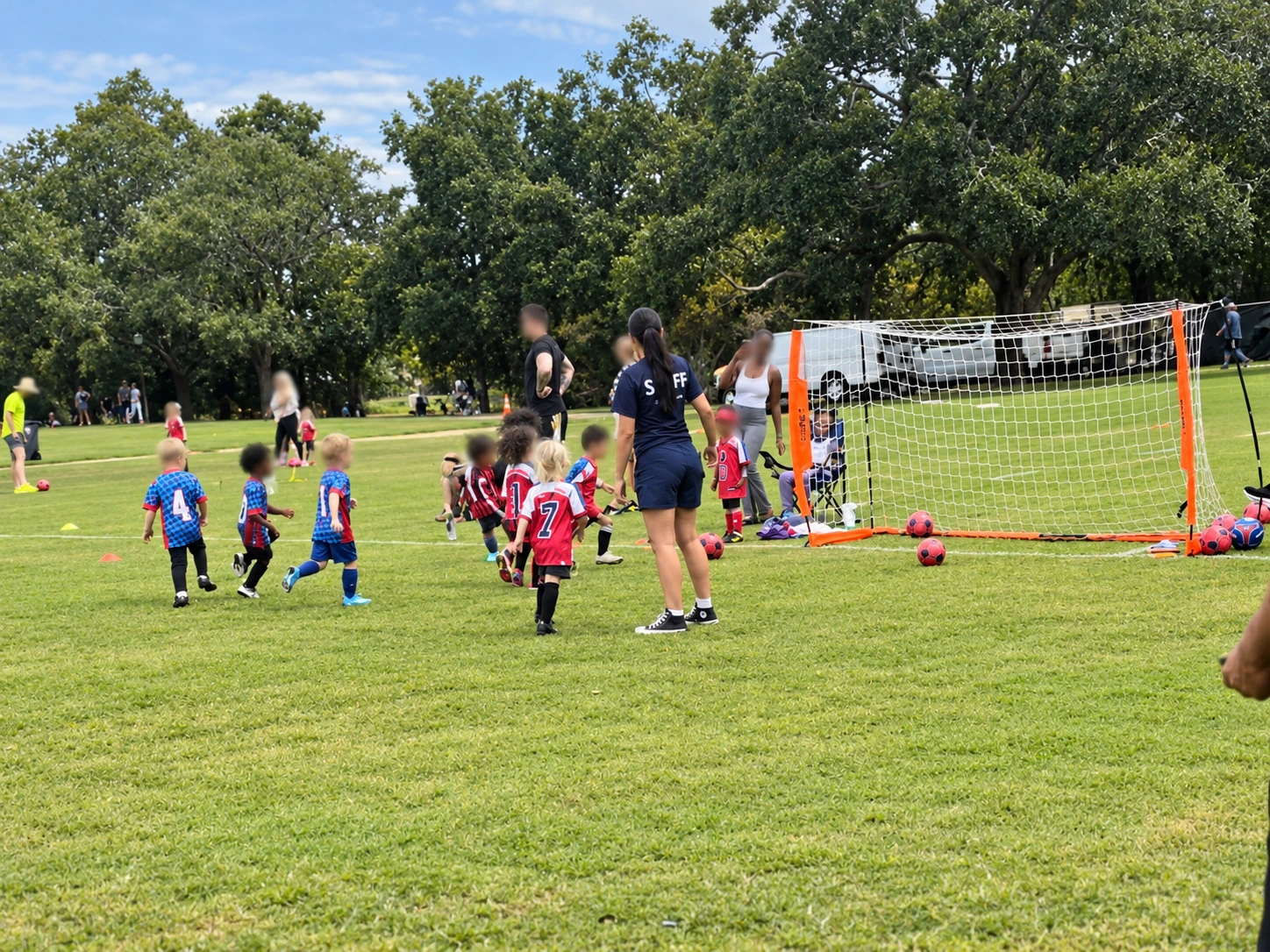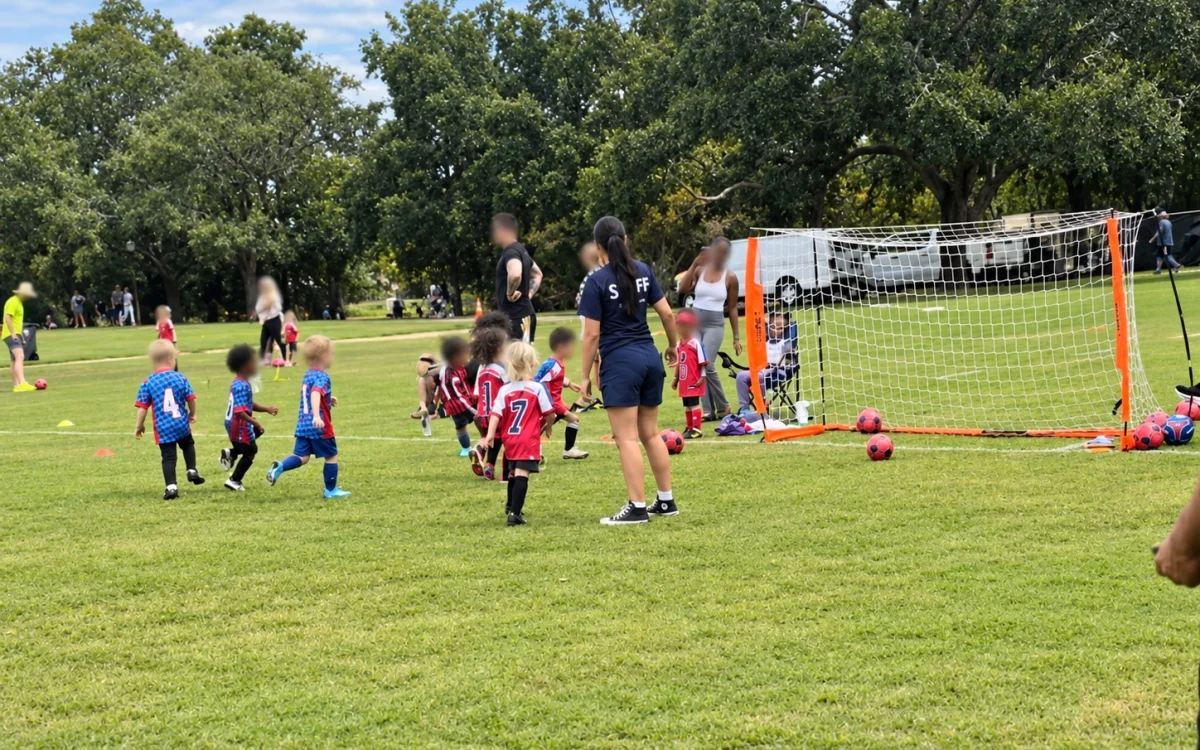
After police responded to a dispute at a youth soccer game involving a gifted 3-year-old, similar cases raise questions about how quickly ordinary childhood behaviour is treated as a public-order problem.
What happened to Winter Park’s 3-year-old soccer star, Nevada, might not be an isolated incident but part of an old pattern woven into the social fabric of American society. It began as an ordinary day for the young soccer prodigy—until Winter Park police showed up.
Nevada was three years old, according to the parents and playing with five-year-old players on an i9 Sports soccer team in Winter Park. Body-camera footage released by the Winter Park Police Department shows officers first speaking with a league official, who alleged that Nevada’s parents were causing a disturbance. The officers later spoke with Nevada’s parents, who denied the allegation and said they did not socialize with the other parents and therefore could not have disturbed them.
At the end of the incident, Nevada was asked to withdraw from a team of boys who were two years older than him. Although the league official alleged that Nevada had pushed other players down, the available videos do not show this. The child is a gifted dribbler, and, like players with rare talents, he plays “clean games,” leaving his opponents struggling to understand what happened when he moves past them. Numerous videos confirm his ability.
According to an audio recording of the 911 call, the parents of the other children did not place the call. Instead, it was made by an i9 Sports league official in Winter Park. The officer is heard asking for police officers to arrive quickly, before Nevada’s parents left the scene.
Although the Winter Park Police Department characterized the incident as a civil dispute requiring no arrest, the case has reopened an old wound concerning how police manage children’s behaviour and disagreements involving parents and children—especially children of colour.
“It is the repeated conversion of low-level childhood behaviour—or, in Nevada’s case, exceptional performance—into a public-order problem.”
Nevada’s case may differ from other, more clearly documented cases of racial discrimination, but it still reflects a broader common thread: adults treating ordinary childhood behaviour as a threat or discipline problem, then escalating the situation to police instead of using developmentally appropriate intervention.
In January 2020, Montgomery County Police officers handcuffed and berated a 5-year-old Black kindergartner who had wandered away from school. The case ended in a $275,000 settlement that Montgomery County agreed to pay to the boy’s mother, Shanta Grant, in 2022. The settlement included no admission of liability, and the family agreed not to bring further claims against the county. The two officers involved were suspended without pay, and the department changed its training and procedures for handling young children.
In March 2005, in St. Petersburg, Florida, a 5-year-old Black kindergartner was handcuffed. School officials called police during a child’s tantrum, and the officers handcuffed her when they arrived. The police chief later said that the officers had made an “error of judgment”. The officers were reprimanded, and the department changed its policy to prohibit handcuffing children under 8 without a supervisor’s involvement.
In 2015, also in Miami, a 5-year-old Latino boy, Jose Feliciano, was handcuffed after fighting with another student. The school called the police over the incident. An Internal Affairs investigation later found the allegations to be true, and Officer Paul Gourrier admitted to handcuffing Jose and pulling his ear to “teach him a lesson.” The officer was suspended for two days without pay and required to complete professionalism and ethics training.
In April 2011, a 7-year-old Black special-education student in Queens, New York, was handcuffed by police after becoming upset during an Easter egg decorating activity at school.
In each case, the school or institution chose to involve police rather than child-centred support professionals. Such incidents can traumatize children, causing them to associate school and police with fear or violence.
The pattern is complex. It is not simply a matter of schools calling police over misbehaving children and officers showing up. It is the repeated conversion of low-level childhood behaviour—or, in Nevada’s case, exceptional performance—into a public-order problem. The escalation is especially troubling when the child is very young, Black, Latino, disabled, or otherwise treated as more threatening than their age and conduct would suggest.