The crowds gathering around Zion Ministry are not necessarily validating everything it does. But they are asking the Nigerian Catholic Church a question it can no longer afford to ignore.
For some time now, Evangelist Ebuka Obi has been in the news for different reasons. While his admirers defend him at all costs, his detractors accuse him without mercy. Between both sides, we have lost the possibility of a sane conversation about his ministry. No one appears willing to listen to the other. Instead, we attack one another—some determined to prove Zion Ministry right and others equally determined to prove it wrong.
But what if we stopped asking only who is right or wrong and began asking why ministries like Ebuka Obi’s emerge, what spiritual hunger sustains them, and how the Church might have accompanied them more wisely?
Before you comment on or share this article, suspend your judgment for a moment and hear me out. There is no reason we cannot agree to disagree about the Zion Prayer Movement Outreach.
For full disclosure, Evangelist Ebuka Obi began as a Catholic and continues to identify himself as one. Although the Zion Prayer Movement Outreach officially describes itself as a non-denominational prayer ministry, Obi’s Catholic identity and the large number of Catholics attracted to his ministry make it impossible to treat Zion as something entirely external to Nigerian Catholicism.
I am neither comfortable with every aspect of the ministry in its present form nor prepared to dismiss the possibility that it may represent a gift requiring ecclesial discernment.
Charisms Do Not Arrive Fully Formed
History teaches us that new spiritual movements often begin amid suspicion, resistance, uncertainty and even error. What they eventually become may depend partly on whether the Church merely condemns them or accompanies, discerns, corrects and helps to refine their gifts.
In 1940, during the Second World War, Brother Roger Schütz, the son of a Reformed Protestant pastor, settled in the French village of Taizé. He welcomed refugees, including Jews, while nurturing the vision of a Christian community committed to prayer, reconciliation and unity. After the war, other brothers joined him, and the community gradually took shape.
Today, Taizé is an international ecumenical community where Christians from different denominations pray together and bear witness to the possibility of reconciliation in a divided world.
Three years later, amid the devastation of the same war, Chiara Lubich and a small group of young women began gathering around the Gospel in Trent, Italy. Their experience eventually gave birth to the Focolare Movement, an international movement centred on a spirituality of unity and Jesus’s prayer “that they all may be one” (John 17:21).
Nigeria also offers a different kind of example. T. B. Joshua began his public ministry without the conventional theological formation normally associated with established Christian leadership. Yet, over time, his public presence became more polished, his ministry more organized and his religious vocabulary more recognizable. The Synagogue, Church of All Nations eventually achieved an international reach few would have imagined from its modest beginnings.
Whatever one thinks of T. B. Joshua or the controversies surrounding his legacy, his development shows how an initially unrefined religious leader can be shaped by experience and by the people and structures surrounding him. His international success does not prove that numerical growth validates a ministry. It simply demonstrates that religious leaders and their gifts can be shaped—for better or worse—by those who believe in them, organize around them and help communicate their message.
I am not placing Brother Roger, Chiara Lubich, T. B. Joshua and Evangelist Ebuka Obi on the same theological or ecclesial footing. Their movements, contexts and relationships with institutional Christianity are profoundly different. My comparison concerns one point only: emerging spiritual gifts require discernment and accompaniment if they are to mature responsibly.
What Are the Crowds Asking?
The Church in Nigeria must learn from these histories—not by romanticizing every new religious personality, but by asking what spiritual hunger makes such ministries attractive to so many people.
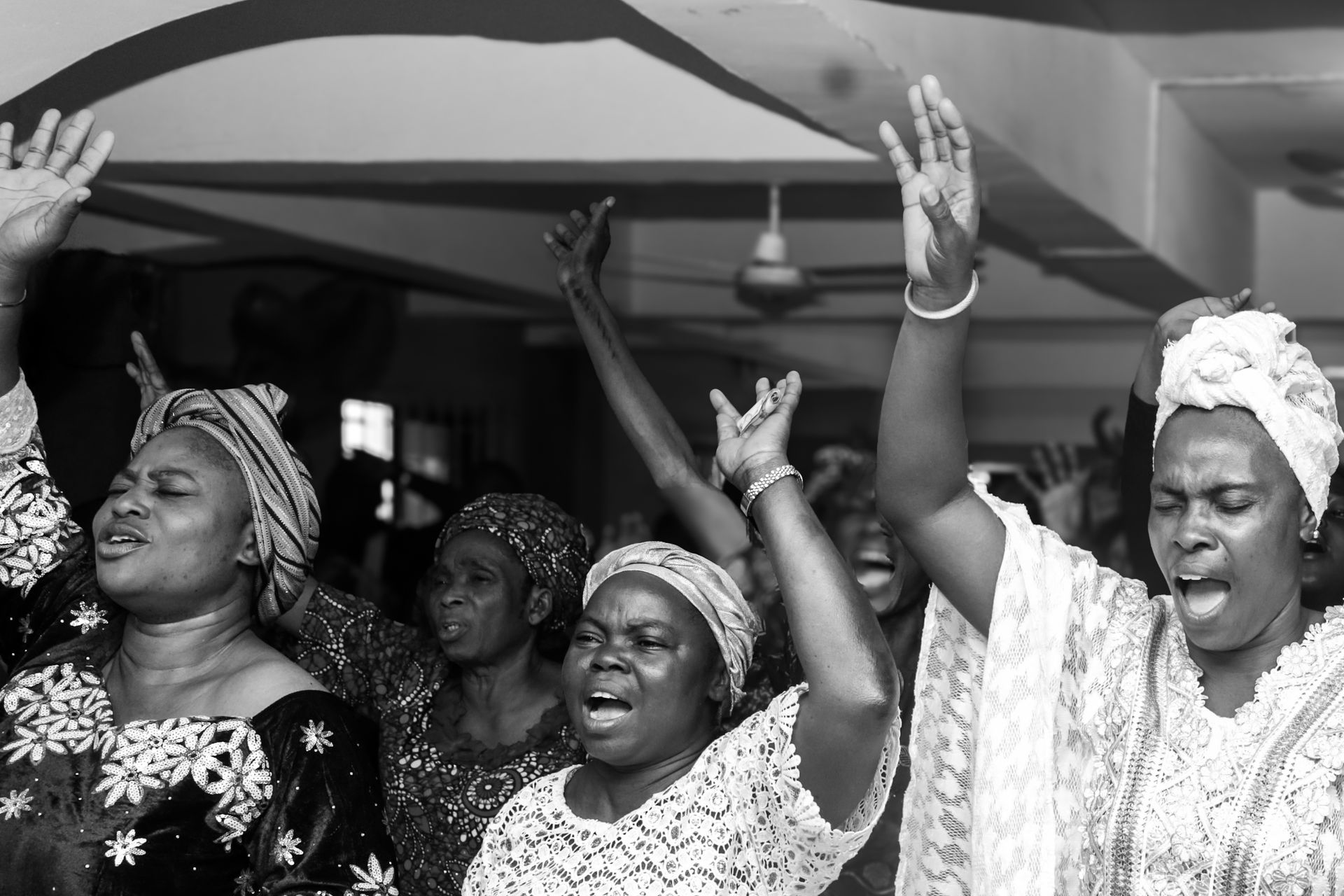
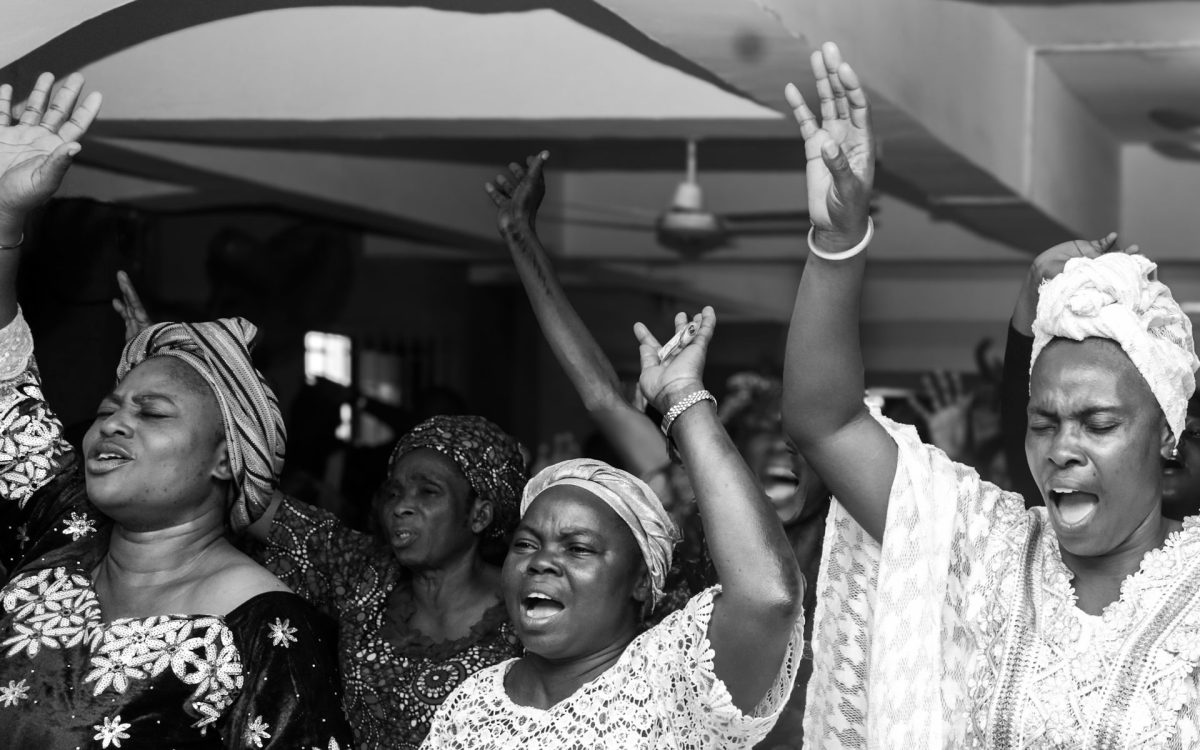
The crowds gathering around Evangelist Ebuka Obi are asking the Church a question. Their presence suggests that many people are searching for healing, participation, immediacy, testimony, spiritual power and a more visible connection between faith and the struggles of daily life.
Their presence does not necessarily mean that the Eucharist or Catholic liturgy is incapable of responding to their spiritual needs. The problem may lie in how the liturgy is celebrated, interpreted and connected to people’s lived realities.
When worship appears distant from people’s wounds, fears, aspirations and cultural imagination, they begin searching elsewhere for a language through which they can encounter God.
Perhaps this is where Evangelist Ebuka Obi and other ministries like his enter the conversation. Perhaps they are revealing unfamiliar ways in which the Holy Spirit may already be unsettling and challenging the Nigerian Church.
The size of a crowd is not proof of a divine charism. Popularity is not the same as authenticity. But neither should the crowd be dismissed as ignorant, gullible or spiritually immature. The people gathering there are telling us something about what they seek and what they believe is missing elsewhere.
The Church needs to listen.
The Necessary Questions
As with every large and rapidly growing religious movement, legitimate questions must be asked about leadership formation, ecclesial accountability, financial governance, safeguarding policies and practices, personality-centred leadership, and the theological presentation of healing and miracles.
Asking these questions is not persecution. It is part of responsible ecclesial discernment.
At the same time, the prominence of Zion Ministry cannot be explained by its leadership alone. The Nigerian Church must also examine its own structures.
When lay charisms emerge outside familiar clerical patterns, do we accompany and test them, or do we respond only after they have become too influential to ignore? Do we provide spaces in which laypeople can discover, develop and exercise their gifts responsibly? Or do we expect every serious spiritual initiative to originate with, remain under and be controlled by the clergy?
The Nigerian Church has a serious leadership problem regarding lay ministries. We speak frequently about the dignity and mission of all the baptized, yet we sometimes organize spiritual ministry as though serious religious authority belonged almost exclusively to the clergy. The gifts of laypeople are welcomed as long as they remain within familiar boundaries and do not unsettle established arrangements.
If a layperson develops a spiritual gift the Church does not understand, distancing that person is not necessarily discernment. Sometimes it is an admission that we lack the patience, structures or humility needed to accompany what we cannot immediately control.
This does not make the Church responsible for every mistake committed by an independent ministry. Ebuka Obi and Zion’s leadership remain responsible for their choices. But if this ministry emerged from Catholic soil and continues to draw deeply from Catholic identity and devotion, the Church cannot treat every problem surrounding it as entirely external to itself.
Criticism alone will not explain why so many Catholics are drawn to this ministry.
Something there is responding to a real spiritual hunger. It is offering many people an experience of religious belonging and spiritual participation. It may also be challenging the Nigerian Church to decentralize some of its structures, recognize charismatic gifts and create greater room for laypeople to participate meaningfully in its mission.
Accompaniment Is Not Endorsement
Recognizing this does not require us to approve everything Ebuka Obi does. Genuine accompaniment is neither blind endorsement nor hostile condemnation. It requires discernment, correction, formation, accountability, patience and trust.
Zion Ministry needs more than cheerleaders and critics. Its leadership needs credible people who can accompany it honestly—people capable of recognizing what may be a genuine gift while also challenging its excesses.
It also needs accountable structures that do not depend entirely upon the personality of one leader. Charisms may begin with individuals, but if they are to serve the Church and society responsibly, they must eventually become larger than the personalities through whom they emerged.
The Second Vatican Council teaches that charisms, whether extraordinary or simple, should be received with gratitude because they contribute to the renewal of the Church. But the same Council insists that their authenticity and proper use require discernment. Church leaders are called “not indeed to extinguish the Spirit, but to test all things and hold fast to that which is good” (Lumen Gentium, 12).
This is the balance we need.
The Church must not extinguish the Spirit. But neither should anyone invoke the freedom of the Spirit to place a ministry beyond accountability. Discernment is not an attempt to control the Holy Spirit; it is part of the Church’s responsibility to test the spirits.
God can do extraordinary things through people who do not belong to the clergy. That should not be controversial in a Church that teaches that all the baptized participate in Christ’s mission.
Perhaps it is time for Church leadership in Nigeria to accept that the Holy Spirit cannot be clericalized. The Spirit blows where it wills. Ebuka Obi may one day disappear from public attention, but another figure will emerge because the spiritual hunger to which his ministry is responding will remain.
If people cannot find room for their spiritual yearnings and gifts within the Catholic Church, they will search for that room elsewhere.
The answer is not to accept every emerging ministry uncritically. Nor is it to push such movements away until they become completely independent of ecclesial guidance. The answer is to listen, test, form, correct, accompany and, where appropriate, integrate.
A Kairos Moment
This is a kairos moment for the Church in Nigeria: a time to attend seriously to the popular devotions, spiritual hunger and religious imagination of our people.
The Nigerian case also raises a question relevant far beyond Nigeria. Across the continent, African Catholics inhabit a religious world in which healing, deliverance, prophecy, testimony, communal participation and the nearness of the spiritual world remain important. If Catholic structures fail to engage these realities responsibly, other movements will.
Evangelist Ebuka Obi may not represent the future of African Catholicism in its finished form. But the questions raised by his ministry may be pointing toward a future the Church can no longer afford to ignore.
The deepest question is therefore not whether Ebuka Obi is entirely right or entirely wrong. It is whether the Church can recognize the hunger revealed by the crowds, discern whatever gift may be emerging, correct what needs correction and create room for the Spirit to work through people whose ministries do not begin in familiar places.
The future of African Catholicism may depend partly on how we answer.