The overlooked neighbours of the night that control pests, pollinate baobabs and reconnect African forests.
There is a popular Igbo saying: Abalị dị egwu—the night is mysterious. The saying may not make much sense to those who have never lived in places troubled by insecurity or near thick forests with little or no light, where the inhabitants of the forest become fully active after dark.
Those who live around forests can testify that darkness does not mean emptiness. The forest is fully alive at night, with different species of nocturnal animals carrying out their business and helping to keep our ecosystem in balance, just as humans and other species do.
Among these nocturnal animals that maintain our ecosystem in balance are bats, members of the order Chiroptera. At the time of writing this text, there are 1,515 known species of bats distributed around the world, except in the extreme polar regions and a few highly isolated oceanic islands. Their greatest diversity is found in tropical regions, particularly in Central and South America, which together are home to almost one-third of the world’s bat species.
Bats are known to play crucial roles in our ecosystems, including pest control, pollination, seed dispersal and nutrient cycling. Because bats have voracious appetites, some insect-eating species can consume a substantial proportion of their body weight in insects each night, while lactating females may consume even more.
Studies have documented bats feeding on agricultural pests such as corn earworm moths and spotted cucumber beetles. In this way, colonies of insect-eating bats can help control these pests and reduce the damage they cause to corn, cucumber and other farms.
They are also super-pollinators with the capacity to carry pollen over long distances. Certain species, such as the lesser long-nosed bat, Leptonycteris yerbabuenae, can undertake nightly foraging trips of approximately 100 kilometres. They can also carry large seeds tens or even hundreds of metres away from the mother trees.
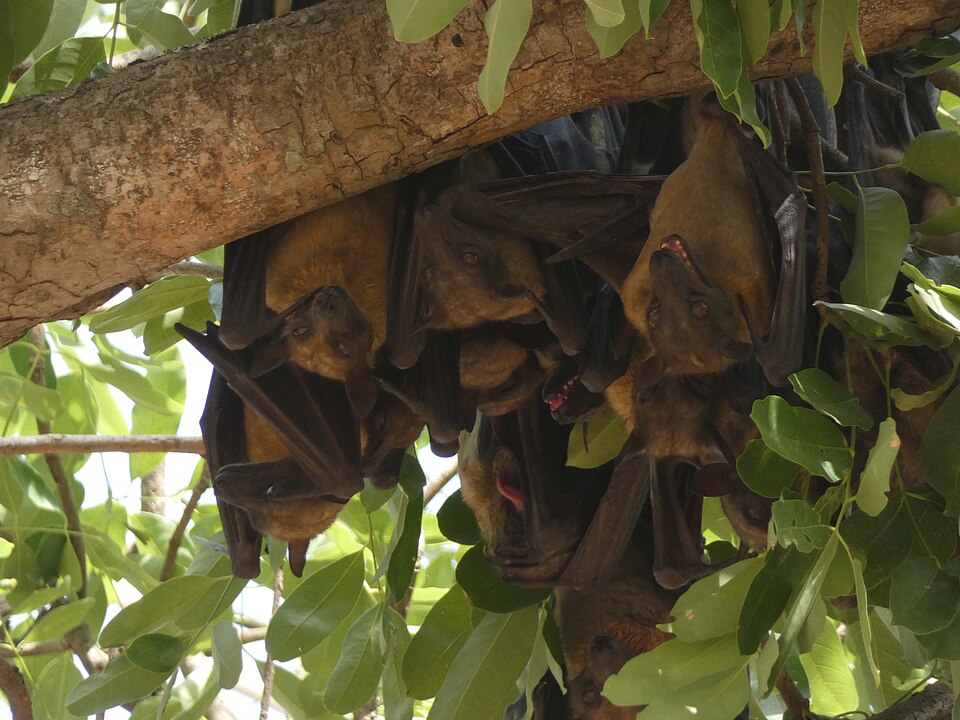
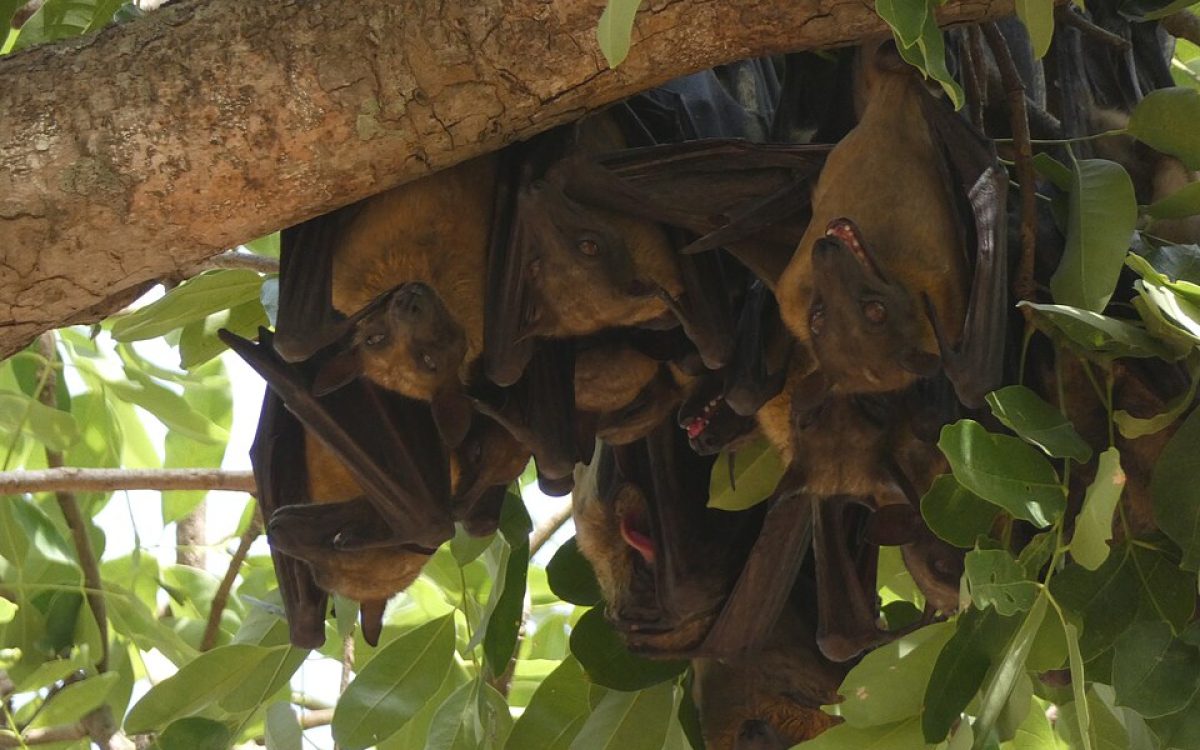
With small seeds, it has been shown that Old World fruit bats such as Cynopterus sphinx have the potential to transport viable seeds over very long distances. A separate study of straw-coloured fruit bats found that a single colony of 150,000 bats could disperse more than 300,000 seeds in one night, generating enough natural reforestation to kick-start the regrowth of roughly 800 hectares of forest per year.
“At night, while humans rest, straw-coloured fruit bats carry out work that daylight rarely witnesses.”
In West Africa, for example, they are pollinators of the legendary baobab tree. This is not the case in Southern Africa, where baobabs have adapted smaller flowers, drooping petals and wider stigmas, attracting a variety of nocturnal moths that serve as their primary pollinators.
In West Africa, straw-coloured fruit bats visit the baobab’s large flowers for nectar and pollen, carrying pollen between different flowers and trees.
Unfortunately, straw-coloured fruit bats are often treated only as pests or bushmeat. The species is currently listed as Near Threatened, and its population is declining because of hunting, roost destruction and the loss of large trees. Considering their capacity to regenerate forests and maintain the balance of ecosystems, African governments, researchers and conservation groups are responding through colony monitoring, the protection of roosts and community education.
“Bats deserve to live beyond the services they offer to our ecosystems and to humans.”
They have rights, like every other member of our ecosystem, to be protected and respected if we want to be responsible for one another. Their survival does not concern their species alone. It concerns all of us who share this universe.
“When their movements keep trees and landscapes connected, their persecution becomes a loss shared by all of us.”
This week, protect one overlooked neighbour of the night: learn where bats roost near you, refuse needless disturbance and support those safeguarding their habitats. And as you do that, ask yourself: What gift have you rejected simply because it arrives after dark?