The Ethiopian Orthodox Tewahedo Church is known for many things, starting from its elaborate liturgy, the use of incense and drums, as well as its 81-book biblical canon, one of the largest in Christianity. But its ecological sensibility, though very significant, is probably one of the least known things about this ancient Christian tradition.
External manifestation of the sacred is important in the Ethiopian Orthodox tradition. And this involves not only what happens inside the church, but also the way the space surrounding the community is treated.
Today, with the capacity of aerial photography evolving rapidly, something quite fascinating has become more visible about the places where many Ethiopian Orthodox churches are situated.
From the air, parts of the Ethiopian highlands look brown and open. Then suddenly, in the middle of this landscape, a small green island appears.
And when you look more closely, at its centre stands a church. Its positioning is not appear by accident.
For generations, priests and local communities have protected the forests surrounding their churches as part of the sacred space. While much of the neighbouring forest disappeared through farming, grazing and other pressures on the land, these little forests remained.
In fact, researchers studying 78 Ethiopian church forests recorded 148 indigenous species of trees, shrubs and lianas. These forests have become some of the remaining refuges for Ethiopia’s native biodiversity.
But they are not museums.
People live with them.
They provide space for prayer and religious celebrations, but also support beekeeping, seed collection, medicinal plants and other activities important to surrounding communities. Birds, insects and other creatures also find refuge there.
Of course, the forests themselves are under pressure.
Farming continues to move closer to their edges. Livestock enter the forests and eat or trample young plants. Invasive species are another problem. And because many of these forests now exist like islands separated from one another, their survival is not guaranteed.
One of the responses to this problem caught my attention because of how simple it is. They build walls.
Not walls to prevent people from entering the sacred space, but low stone walls around parts of the forest to prevent livestock from entering and destroying young vegetation.
There is something about this that I find beautiful.
Sometimes protecting life does not begin with a grand project, rather by recognizing that something needs a boundary.
But there is something else about these church forests that I find even more interesting.
We could easily say that these forests are important because they protect biodiversity, provide honey, preserve indigenous plants, shelter birds and insects, or contribute to the wellbeing of surrounding communities.
All of that is true. But that is not where their value begins.
The forest does not have to prove its usefulness before it deserves to remain.
For generations, these communities preserved these spaces because somehow the forest belonged to the sacred world surrounding the church. The church was not simply a building standing on a piece of land. The space around it mattered too.
Perhaps there is something here for us.
We talk a lot today about ecology. Our churches speak about climate change, recycling, renewable energy and care for creation. These are important conversations.
But the Ethiopian church forests push the question a little further.
What around us do we consider sacred enough that we would refuse to destroy it?
Maybe it is an old tree.
Maybe a small forest.
Maybe a river.
Maybe a wetland that looks useless because nobody has yet found a profitable use for it.
Or perhaps simply that little piece of earth that everyone is always tempted to turn into something else.
Someone before us may have protected it.
And someone after us may need it.
The Ethiopian church forests have survived partly because generations of people made room for something other than themselves.
Maybe that is where ecological responsibility begins.
Look around you.
What little green island has been entrusted to your generation?”
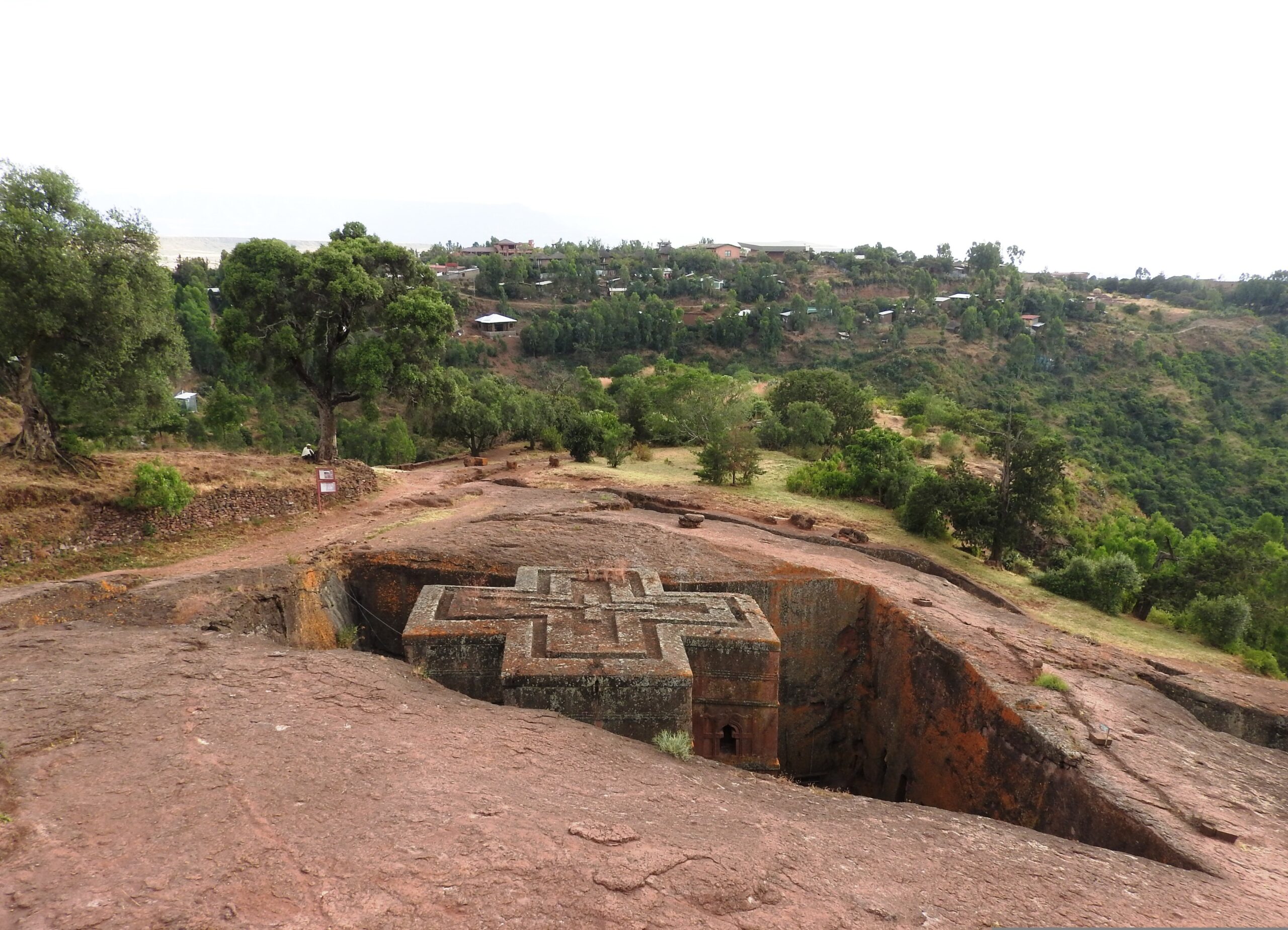
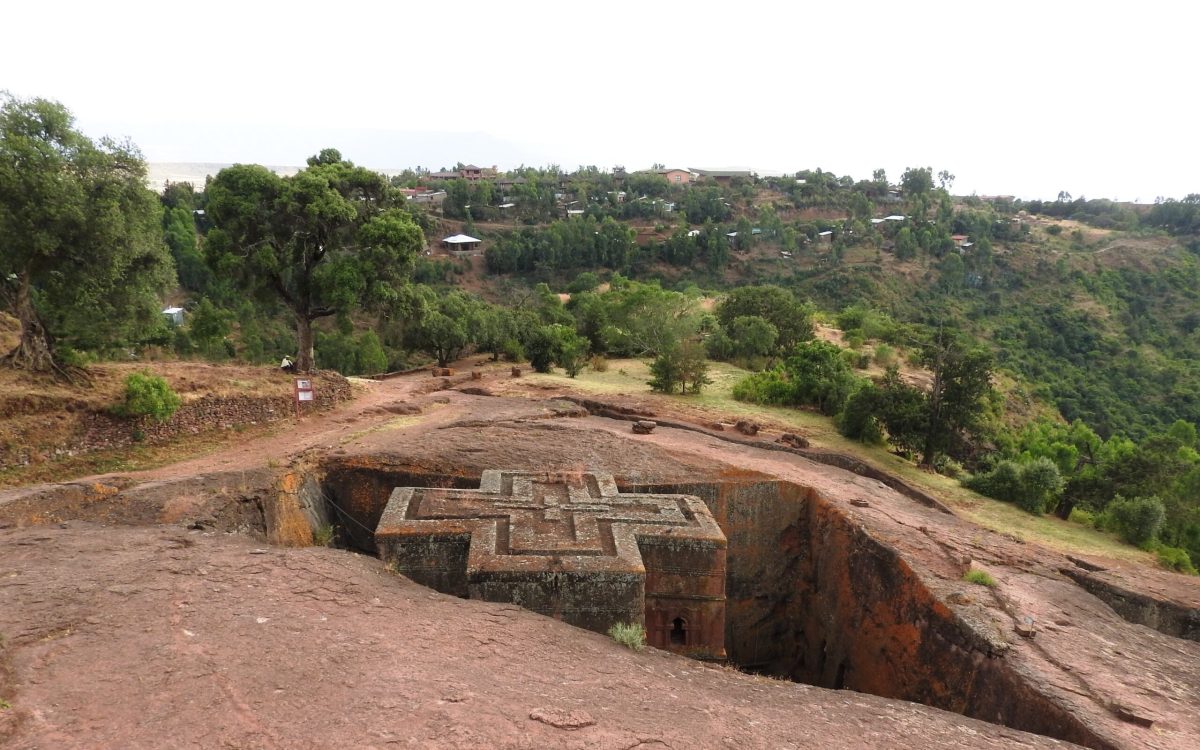
Photo Credit: An Ethiopian Orthodox rock-hewn church at Lalibela, Ethiopia. Photo: Heiss/Pixabay.