We live, work, marry, and celebrate across religious and ethnic lines. Why do we keep believing those who tell us we cannot share a country?
Nigerians are very gullible. I mean the entire nation, including myself. This is not a question of education or lack of it. It has something to do with the way both education and religion have shaped our minds. Colonial education and missionary religion played their part, but I do not want to leave the blame there. We also need to ask what we have done with what we inherited.
As a people, we have struggled to build a sense of nationhood. The British protectorate system played an important role in that history. Yet more than a century later, we cannot explain every failure by pointing back to the British. What have we done to make this country a place where its people belong to one another?
The neighbours we know
Religion shows how easily we can be divided. Recently, the outcry over a “Christian genocide” in Nigeria drew many Christians into an account of our crisis that treats Islam itself as the threat. Christians have suffered terrible attacks. Their suffering must be named, and they must be protected. Muslims have also been killed, displaced, and abandoned by the state. We fail both communities when we turn a complex history of violence into a story in which one religion stands against another.
Most of us know this from our own lives. We know a cousin, a friend, a neighbour, or a coworker who has never treated us according to our religion. We know families where one parent is Christian and the other Muslim. We know places where Christians join their neighbours for Eid and Muslims visit their friends at Christmas.
Why, then, do we so readily believe those who tell us we cannot live together?
What else is in the agreement?
We should pay attention to what is being proposed in our name. The American congressional report on the persecution of Christians in Nigeria calls for a bilateral agreement to protect vulnerable Christian communities and confront jihadist violence. In that same proposal, it calls for economic cooperation and an effort to counter China and Russia. It also suggests enlisting France, Hungary, and the United Kingdom.
Protection, security, economic interests, and geopolitical competition appear together in the report.
Now Nigeria and the United States have signed a framework for investment in our minerals. I am not saying that the congressional report caused that agreement. I am asking Nigerians to read both documents and ask what kind of partnership is taking shape. Who will decide its terms? Who will benefit from our minerals? Will they be processed here, with jobs and lasting value for Nigerians? And will the communities whose suffering is invoked have any voice in what follows?
Nigerians deserve protection from violence. We also deserve to know when our suffering becomes part of another country’s strategic calculations.
When politicians remember our differences
Our ethnic identities are used in much the same way. Nigerians marry one another, work together, raise children together, and depend on one another every day. Yet whenever politicians need to protect their interests, they invoke ethnic differences. What could be our richness becomes a reason to distrust one another.
Look at how quickly political alliances change. A leader’s religion or ethnic identity is presented as a danger when it helps an opponent’s campaign, then becomes irrelevant when that same leader can offer access to power. Some who once called on us to be afraid will ask us tomorrow to defend their new alliance. When the alliance breaks down, they will ask us to fear our neighbours again.
We argue with a neighbour while those who set the terms of our lives dine together.
That is what I mean when I call us gullible. I am speaking about myself too. We allow people who share power across ethnic and religious lines to persuade us that ordinary Nigerians cannot share a country.
So the question is not whether a Christian or Muslim, an Igbo, Yoruba, or Hausa person should hold power. The question is what they do with it. Do they protect people? Do they answer for their decisions? Do they leave our communities safer and our children with a future?
If we cannot hold on to those questions, tomorrow we will be called upon to fight one another again. And once again, the people calling us to fight will have somewhere safe to meet.
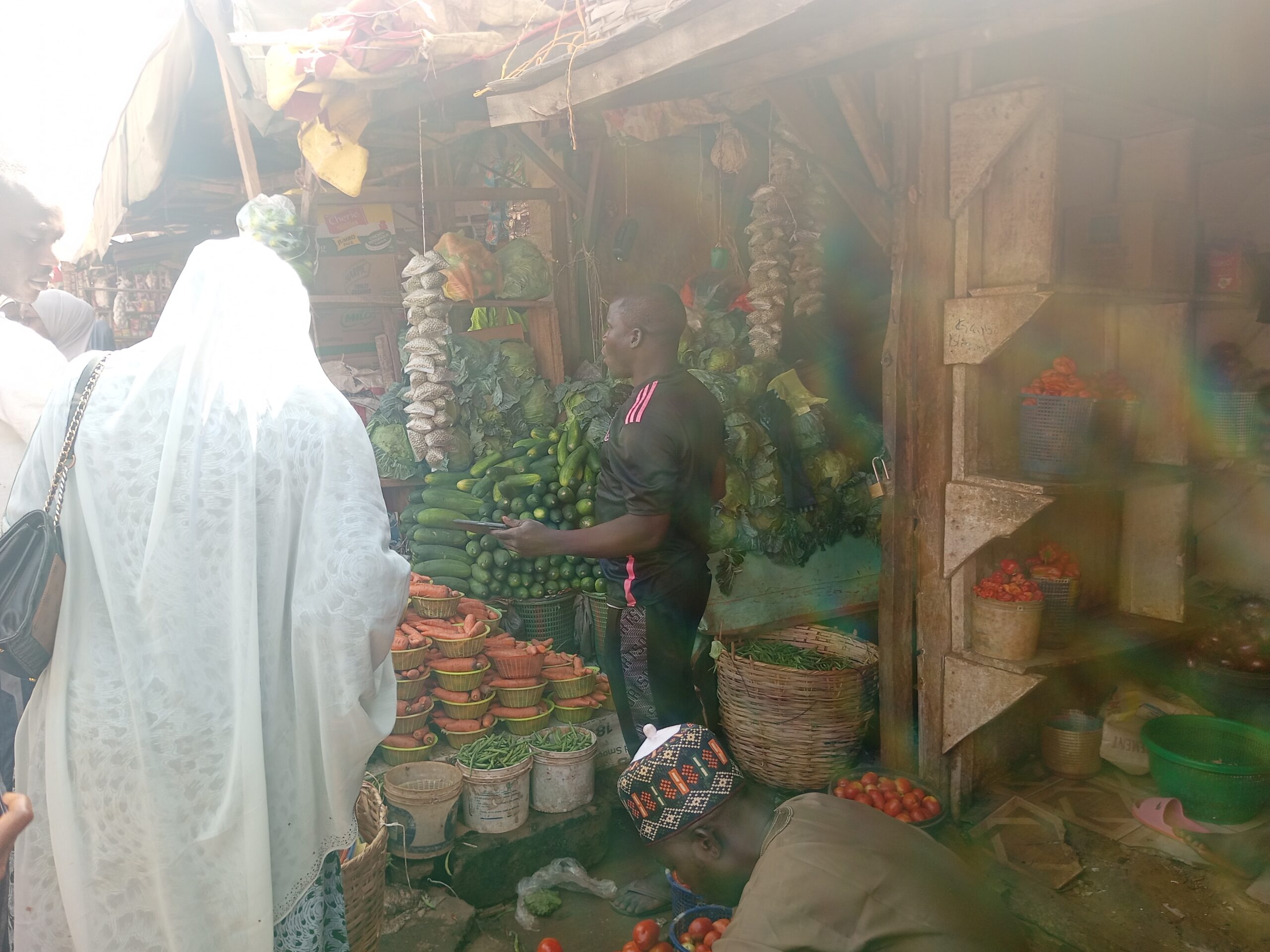
Featured photograph: Market day at Bakin Dogo, Kaduna North, by Samsule2 / Wikimedia Commons, CC BY-SA 4.0.